State-of-the-art interventional endoscopy procedures providing minimally invasive solutions for complex pancreatic, biliary, and gastrointestinal diseases in Tumakuru.
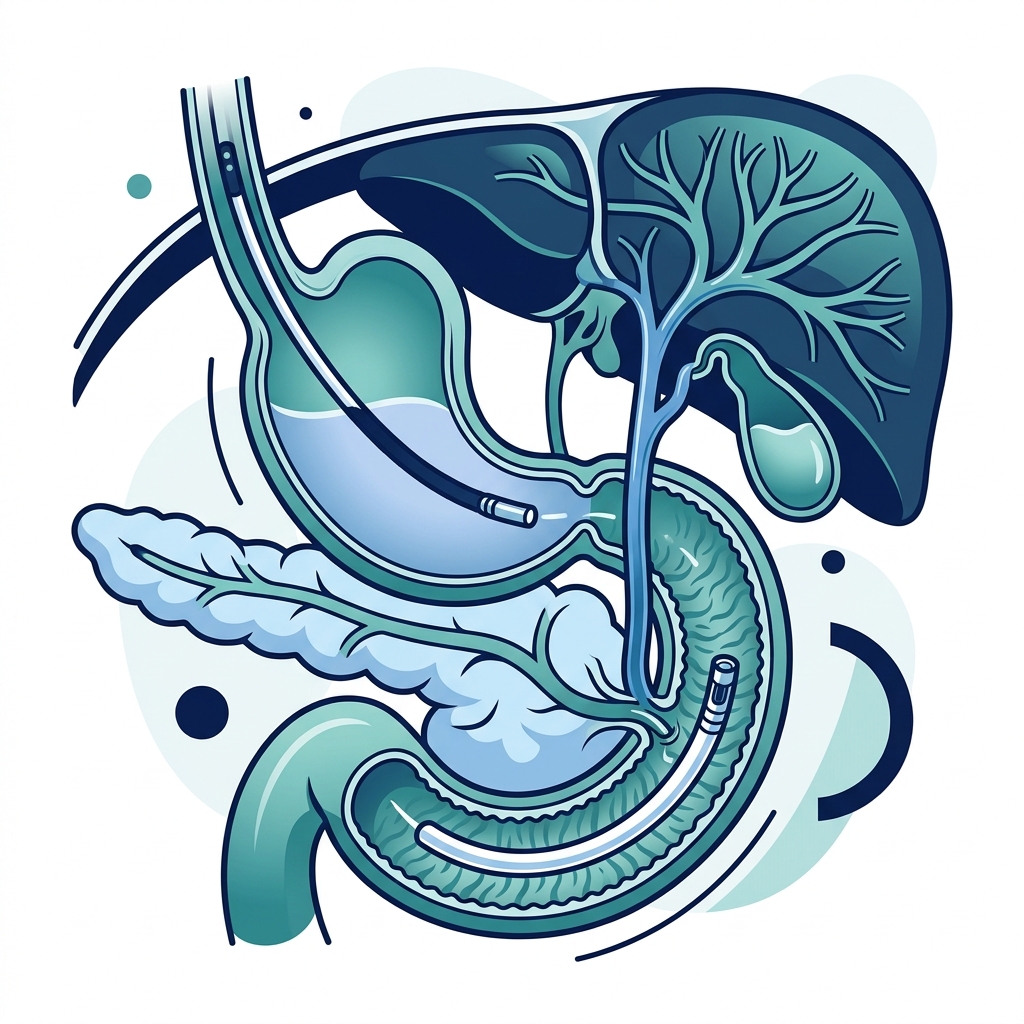
Advanced Endoscopy encompasses complex interventional procedures like ERCP (Endoscopic Retrograde Cholangiopancreatography) and EUS (Endoscopic Ultrasound). These modalities combine endoscopic visualization with fluoroscopy (X-rays) or high-frequency ultrasound to diagnose and treat diseases of the pancreas, gallbladder, bile ducts, and deep GI tract wall layers.
Led by certified ERCP specialist and EUS specialist Dr. Balakrishna A. in Tumakuru, our advanced endoscopy unit at Siddaganga Hospital is equipped to handle complex stone removals, biliary drainage, cyst clearance, and fine-needle tumor biopsies. These procedures provide patient-friendly alternatives to major open abdominal surgeries, with faster recovery.
Patients are typically referred for ERCP or EUS when standard ultrasound, CT, or MRI scans show:
Skin/eye yellowing and severe itching due to gallstones or tumors blocking the main bile duct.
Abnormal widening of the common bile duct, which requires direct camera visualization (Spyglass) or ultrasound staging.
Suspected tumors or fluid collections within the pancreas, requiring high-resolution EUS imaging and tissue biopsy.
Multiple unexplained episodes of pancreatic inflammation, suggesting structural anomalies or hidden micro-stones.
Gallstones that have migrated out of the gallbladder and become trapped inside the common bile duct.
Narrowing of the esophagus, duodenum, or colon from scar tissue or tumors that prevents normal digestive flow.
Certain blockages can quickly become life-threatening. Seek immediate hospital admission if you experience:
We perform advanced interventional procedures using state-of-the-art clinical devices:
Combining endoscopy and X-rays to locate blockages in the bile and pancreatic ducts and immediately place drainage tubes or stents.
Direct removal of trapped stones from the Common Bile Duct using specialized balloon sweeps and basket retrievers during ERCP.
Dilating narrow bile ducts and placing plastic or self-expanding metal stents to maintain flow and relieve jaundice.
Using shockwaves generated inside the bile duct to shatter large, stubborn gallstones into easily sweepable fragments.
Direct fragmentation of large biliary stones using target-guided laser fibers threaded through a cholangioscope.
Inserting a micro-camera directly inside the bile ducts to visually examine duct lining and obtain targeted biopsies of suspected tumors.
Employing an ultrasound transducer at the tip of the scope to capture high-resolution images of organs lying adjacent to the stomach wall.
Performing real-time ultrasound-guided fine-needle aspiration (FNA) or biopsy of pancreatic masses and lymph nodes to obtain cell samples.
Using EUS guidance to deliver targeted therapies, such as injecting medications directly into nerves to block severe pancreatic pain.
Creating a non-surgical drainage channel between a pancreatic pseudocyst and the stomach using specialized metal stents.
An advanced bypass procedure to drain blocked bile ducts when standard ERCP attempts have failed, avoiding external bags.
Interventional endoscopy provides precise diagnosis and treatment with minimal patient impact.
Relieves bile duct obstructions and drains cysts through internal scopes, avoiding large surgical wounds.
EUS provides highly detailed images of pancreatic lesions, outperforming standard external scans.
Stent placement resolves painful blockages and jaundice within hours of the procedure.
EUS-FNA secures high-quality cell samples from deep structures safely and accurately.
Consultant Gastroenterologist & Hepatologist | DM Gastroenterology | 10+ Years Experience
Common questions regarding ERCP and EUS interventional procedures.
ERCP is a specialized procedure used to diagnose and treat diseases of the bile ducts and pancreatic duct. It is primarily therapeutic, allowing the doctor to clear duct stones, dilate strictures, and place drainage stents under X-ray guidance.
EUS combines endoscopy and ultrasound to examine the lining and walls of the upper and lower digestive tract and adjacent organs (like the pancreas and liver). It allows the doctor to take high-resolution images and perform real-time needle biopsies of deep tissues.
Yes. Because these procedures require precision and patience, they are performed under deep conscious sedation or general anesthesia managed by an anesthesiologist. This ensures that you remain asleep and feel no pain throughout the procedure.
Spyglass cholangioscopy is an advanced technique where a very thin, flexible camera is inserted directly into the bile ducts during ERCP. This allows direct visual inspection of the duct walls to distinguish between benign and malignant strictures, and perform targeted biopsies.
Most diagnostic and minor therapeutic EUS procedures are outpatient, allowing you to return home the same day. ERCP patients, especially those undergoing stone extraction or complex stenting, are often monitored in the hospital overnight as a safety precaution.
Contact Dr. Balakrishna A., a leading ERCP and EUS specialist in Tumakuru, for advanced interventional endoscopy.
Schedule Consultation