Advanced diagnostic and therapeutic endoscopy and high-precision colonoscopy performed under conscious sedation for patient safety and maximum comfort.
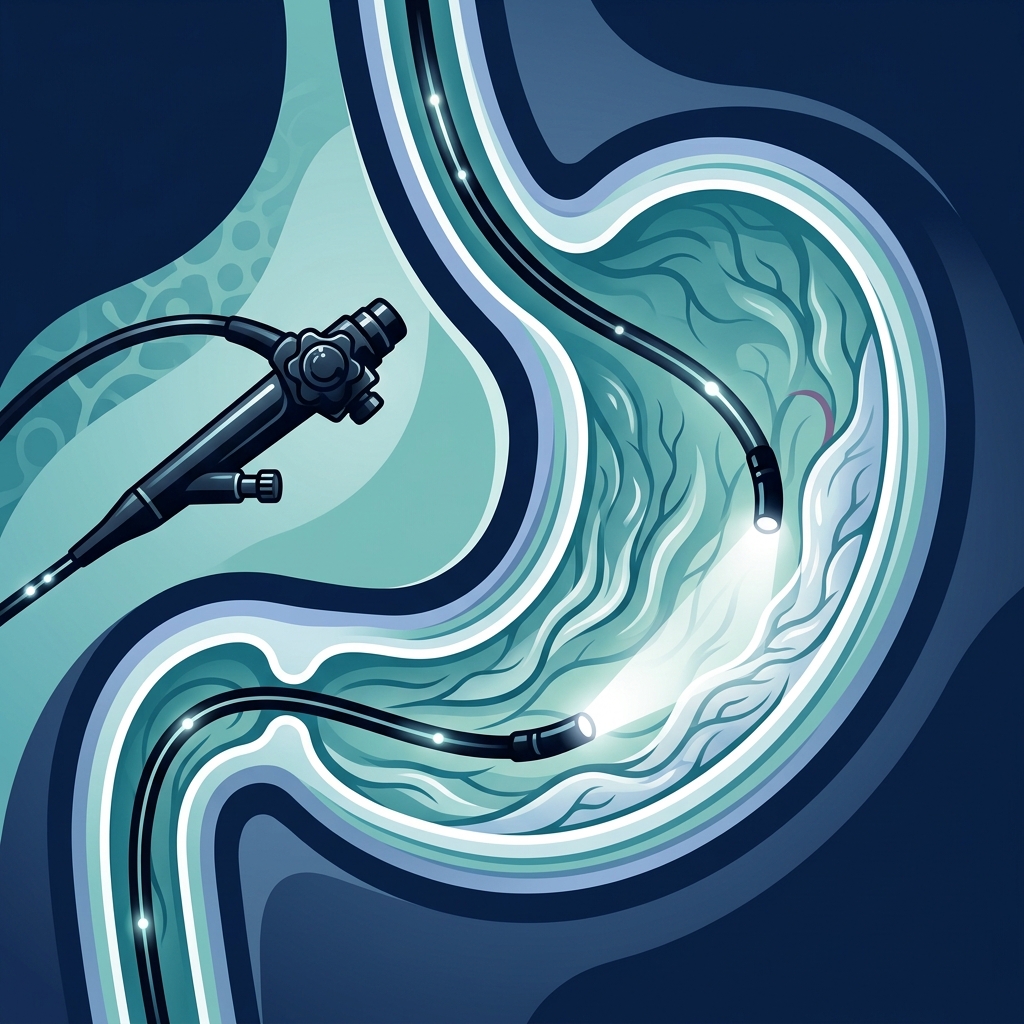
Endoscopy services involve using thin, flexible tubes equipped with high-resolution cameras and light sources (endoscopes) to directly visualize the internal lining of the digestive tract. This allows clinical teams to identify inflammation, bleeding, ulcers, polyps, or early signs of cancer with far greater accuracy than standard imaging.
Managed by Dr. Balakrishna A. in Tumakuru, our endoscopy unit provides both diagnostic screening and interventional therapies. We perform procedures under conscious sedation to minimize anxiety and discomfort, enabling real-time treatments like polyp removal (polypectomy), stricture dilation, and active bleeding control to occur safely during the same session.
A doctor may recommend an endoscopic procedure if you exhibit any of the following persistent clinical signs.
Difficulty or pain when swallowing food, which can point to structural narrowing or motility issues in the esophagus.
Passing blood in stool, vomiting blood, or presenting black, tarry stools, indicating active mucosal bleeding.
Low red blood cell count without a clear cause, often stemming from slow, hidden blood loss in the bowel.
Persistent acid reflux or burning that does not improve after standard medical therapy with acid-suppressive drugs.
Loose stools lasting more than 4 weeks, where a colonoscopy can help biopsy the colon lining to check for colitis.
Ongoing nausea and vomiting that prevents nutrient absorption, requiring direct inspection of the stomach exit.
Certain situations require immediate diagnostic or therapeutic endoscopy. Seek emergency evaluation if you experience:
We perform a full suite of diagnostic screenings and advanced therapeutic procedures:
Direct visual examination of the esophagus, stomach, and duodenum to diagnose inflammation, ulcers, and obtain tissue biopsies.
Interventional procedures performed via scope to treat ulcers, coagulate bleeding tissues, or open strictures without open surgery.
Detailed screening of the entire large colon to locate and immediately remove precancerous colon polyps, preventing colon cancer.
Endoscopic widening of narrow passages in the esophagus, stomach, or colon using specialized balloon dilators or plastic guides.
Emergency endoscopic therapy using heat probes, laser coagulation, or medication injection to stop active internal bleeding.
Placement of tiny elastic bands around enlarged veins (varices) in the esophagus to prevent or treat life-threatening bleeding from liver cirrhosis.
Injection of chemical agents or specialized tissue adhesive directly into bleeding stomach varices or ulcers to secure rapid clotting.
Emergency endoscopic retrieval of accidentally swallowed objects (such as coins, pins, or food boluses) lodged in the upper digestive tract.
A non-contact endoscopic thermal treatment using ionized argon gas to quickly seal superficial bleeding vessels and vascular anomalies.
Mechanical clipping of active bleeding vessels or closure of mucosal tears using small metallic clips delivered through the channel of the endoscope.
Endoscopy offers significant advantages over traditional surgical diagnostic and treatment methods.
Provides direct, high-definition visual access to mucosal tissues and allows for immediate micro-biopsies.
Conducted entirely through natural body passages, eliminating surgical scars, deep incisions, and muscle trauma.
Most procedures take 15–30 minutes, allowing patients to go home the same day after a brief monitoring period.
Enables direct detection and painless excision of precancerous polyps before they can mutate into tumors.
Consultant Gastroenterologist & Hepatologist | DM Gastroenterology | 10+ Years Experience
Common questions regarding patient preparation, sedation, and recovery.
An upper endoscopy (gastroscopy) examines the food pipe (esophagus), stomach, and the first part of the small intestine (duodenum) through the mouth. A colonoscopy examines the entire length of the large intestine (colon) and rectum by inserting the scope through the anus.
We perform endoscopy and colonoscopy under conscious sedation. You will receive medication through an IV that makes you extremely relaxed, comfortable, and sleepy. Most patients do not feel any pain or discomfort and have little to no memory of the procedure afterwards.
For an upper endoscopy, your stomach must be completely empty. You must fast (no food or liquids, including water) for at least 6 to 8 hours prior to the scheduled procedure. We will provide detailed instructions regarding your daily medications during booking.
A colonoscopy requires a completely clean bowel so the doctor can clearly see the lining. You will need to follow a clear liquid diet the day before the procedure and drink a prescribed laxative solution (bowel prep) to flush out the colon. Clear instructions will be given to you in writing.
Yes, removing polyps (polypectomy) during a colonoscopy is a standard, safe, and entirely painless therapeutic intervention. Removing polyps early is key to preventing colorectal cancer. The removed tissue is sent to a pathology lab for evaluation.
Book an appointment today with Dr. Balakrishna A. for a comfortable, professional procedure at Siddaganga Hospital.
Schedule Appointment